

Research Interest 研究の関心
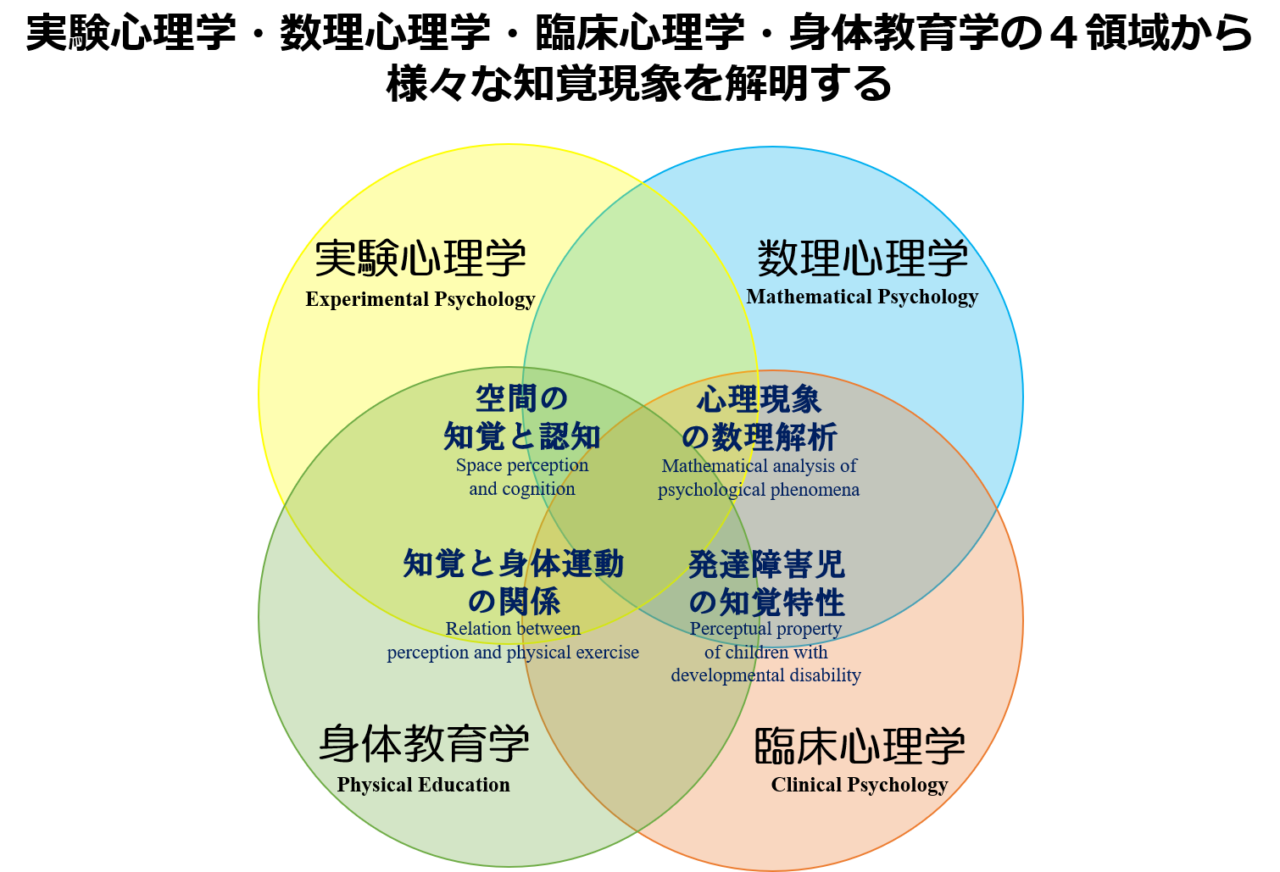
◆Space Perception and Cognition 空間の知覚と認知
本研究の目的は、外部空間を直接観察した際、知覚された外部空間にどのような幾何学的性質があるのかを実験心理学的な研究手法を用いて解明することである。人は、三次元的な広がりがある外部空間を観察した際、網膜像では二次元的な広がりに変換されているにも関わらず、三次元的な広がりを知覚している。視覚的な情報をもとに知覚された外部空間のことを視空間といい、視空間は網膜像から何らかの奥行き手がかりを得て三次元空間が復元されていると考えられる。視空間の幾何学的構造を考えるときにしばしば問題とされるのが、視空間が非ユークリッド性を示すことである。従来の研究では、視空間がある一定の曲面度(曲率)を持つ曲がった空間であることを指摘することにより、視空間の非ユークリッド性が示されてきた(Luneburg, 1950)。本研究は、視空間の非ユークリッド性を新たな手法により示していくことを目指している。
知覚された外部空間がどのような空間であるかを探求していくことは、奥行き知覚の能力の解明やヴァーチャルリアリティー映像、3D映像をより視空間に近づけていくためのデバイスの開発につながる可能性がある点に重要な意義があると考えている。
◆Mathematical Analysis of Psychological Phenomena 心理現象の数理解析
本研究は特に、他者の視線がいずれの方向を向いているかについての知覚(以降、「視線知覚」と記す。)にどのような計量的な性質があるのかを実験心理学的な研究手法を用いて解明することに重点を置いている。私たちは、コミュニケーションにおいて、何かの対象に注意を向けている他者の視線方向などから、他者が注意を向けている対象が何であるかを推測し、その対象を両者の間で意味的に共有しようとする。しかし、他者の視線方向と他者の視線から知覚された方向は常に一致しないことが指摘されており(Gibson & Pick, 1963; Anstis et al., 1969),他者の視線理解の難しさがうかがえる。この指摘以来、どのような条件下で視線知覚の性質が異なるのかを探求する研究が近年も重ねられている(Moors et al., 2016; Otsuka et al., 2015; 2016)。それに対し、本研究では、従来の研究ではあまり指摘されていない、視線知覚が視線そのものの方向によってその性質が異なることについて焦点を当てていく。
他者の視線理解する際にどのような知覚的な性質があるかを深く探求することで、他者の視線方向を正しく理解できているとき、理解できていないときはどのような条件であるかを精査することができる点に重要な意義があると考えている。
◆Perceptual Property of Children with Developmental Disability 発達障害児の知覚特性
本研究の目的は、発達段階において心理面や他者とのコミュニケーションに遅れのある子ども(以降、「発達障害児」と記す。)において、他者の視線がいずれの方向を向いているかについてのどのような知覚特性(以降、「視線知覚特性」と記す。)があるのかを実験心理学的な研究手法を用いて解明することである。多くの先行研究において、発達障害の1つである自閉症スペクトラム症を持つ児童は、視線知覚特性に特異的な面がみられることが指摘されている(Baron-Cohen et al., 1995; Klein et al., 2009; Senju et al., 2003など)。また、Jun et al. (2013)では、精神疾患のある成人と定型発達の成人では異なる視線知覚特性を示すことが指摘されている。それでは、発達障害の1つである注意欠陥多動性障害を持つ児童や精神疾患のある児童はどのような視線知覚特性を示すのであろうか。これらを踏まえ、児童がかかえる障害の違いにより、視線知覚特性が異なるのではないかということに興味を持っている。本研究のねらいは、子どもが抱える障害が異なることにより、視線知覚特性がどのように異なるのかを調べることにある。
本研究は、その障害を判別するための発達検査を開発するための基礎研究として位置づけられることに重要な意義があると考えている。本研究では、多種多様な障害を持つ児童を対象に心理実験を実施することにより、障害を判別していくために必要な基礎的なデータベースの構築していく。この基礎的なデータベースの積み上げにより、療育機関や医療現場で実用的な検査項目として用いられていく可能性を持つ点において研究の価値が高いと考えている。
◆Relationship between Perception and Physical Exercise 知覚と身体運動の関係
何らかの身体運動を行っている時に、人の知覚処理はどのように変容するのであろうか。身体運動時には、視覚、触覚、聴覚に加えて、固有感覚、前庭感覚などの情報が処理されていると考えられる。さらに、何らかの筋緊張がある状態であろう。身体運動を持続的に行うことで、筋疲労を伴うことも考えられる。これらの複数の情報を身体及び脳が受け取り、処理した結果は、知覚の変容や身体運動の調整をもたらす場合がある。本プロジェクトは、感覚及び運動の入力と出力の関係から、身体及び脳の処理メカニズムを探求することを目指す。
→Back to Home.
→See the Curriculum Vitae.
→See the Achievements.